
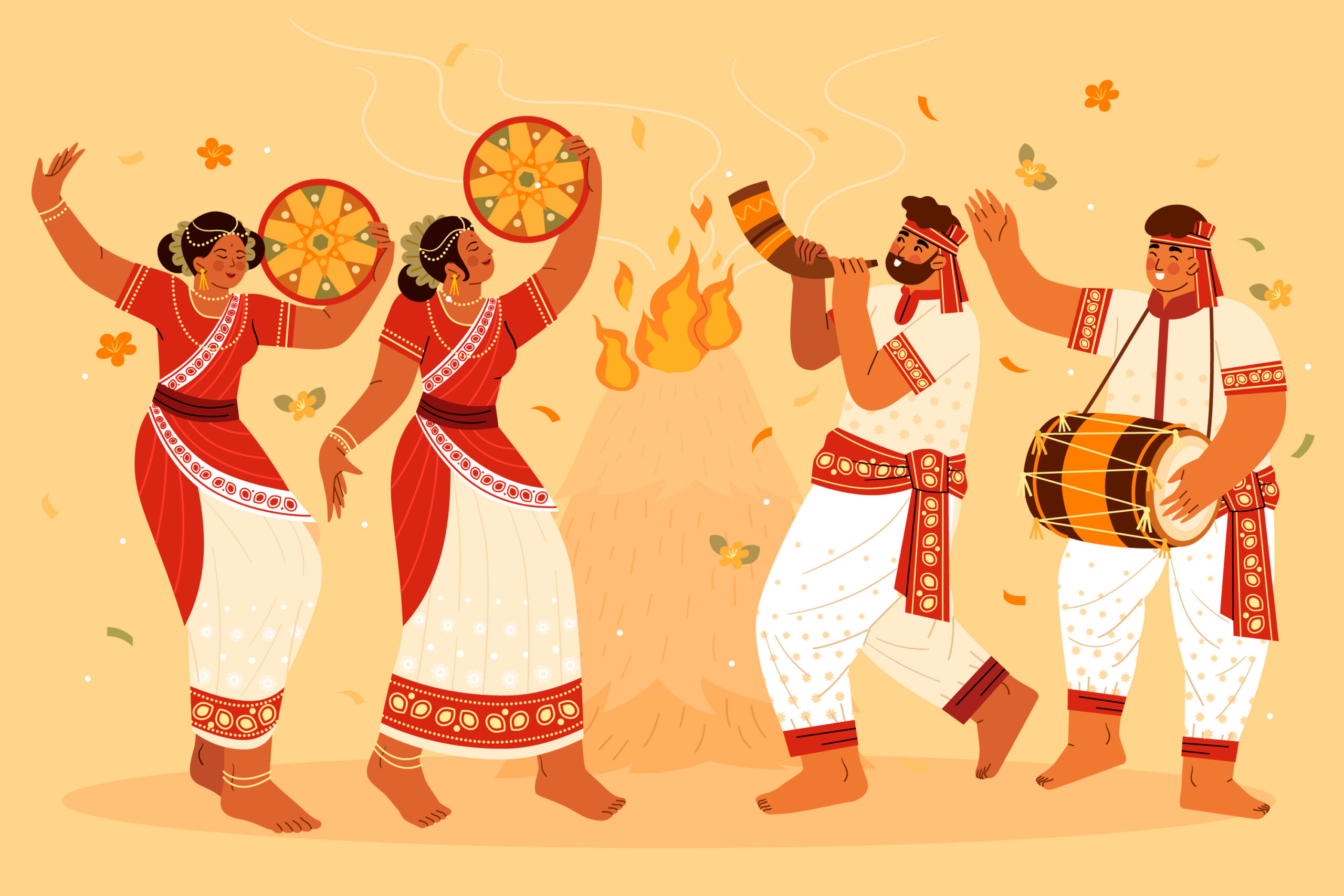
Bihu is one of the most vibrant and culturally rich festivals of Assam, celebrated with immense joy, music, and community spirit. More than just a festival, Bihu represents the rhythm of life, agriculture, and tradition in Assamese culture.
This unique festival is celebrated three times a year, each marking a different phase of the farming cycle, making it deeply connected to nature and livelihood.
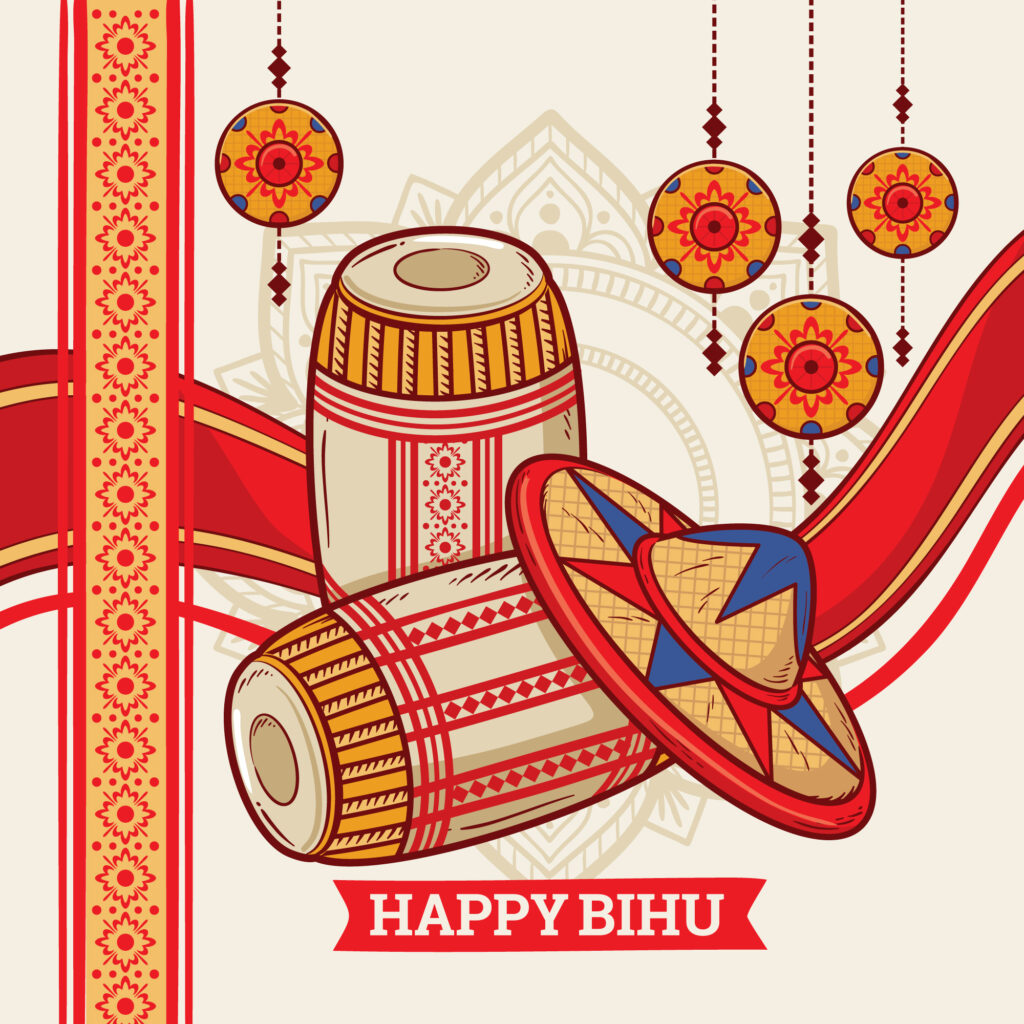
🌟 What is Bihu?
Bihu is a set of three traditional festivals celebrated in Assam that revolve around agriculture, seasons, and community bonding. These are:
- Rongali Bihu (Bohag Bihu) – Celebrates the Assamese New Year and spring
- Bhogali Bihu (Magh Bihu) – Celebrates the harvest season
- Kongali Bihu (Kati Bihu) – Marks a quieter agricultural phase
Each Bihu reflects a different mood—joy, gratitude, and hope.
🌼 Rongali Bihu (Bohag Bihu): Festival of Joy & New Beginnings
Celebrated in April, Rongali Bihu marks the Assamese New Year and the arrival of spring.
Key Highlights:
- People wear new clothes and visit relatives
- Traditional Bihu dance and songs fill the air
- Young men and women perform in open fields
Cultural Elements:
- Dhol (drum)
- Pepa (buffalo horn pipe)
- Traditional attire like Mekhela Chador
This is the most energetic and widely celebrated Bihu.
🌾 Bhogali Bihu (Magh Bihu): Festival of Feasting & Harvest
Celebrated in January, Bhogali Bihu marks the end of the harvesting season.
Key Traditions:
- Community feasts called Bhoj
- Bonfires known as Meji
- Traditional games and competitions
Food Culture:
- Rice cakes (pitha)
- Sesame sweets (til ladoo)
- Fresh harvest delicacies
This Bihu is all about food, abundance, and celebration.
🌱 Kongali Bihu (Kati Bihu): Festival of Hope & Reflection
Observed in October, Kongali Bihu is a quieter festival focused on prayers and protection of crops.
Rituals:
- Lighting lamps (diyas) in fields
- Praying for a good harvest
- Minimal celebrations due to limited resources
It reflects a time of faith, patience, and simplicity.
🎶 Bihu Dance & Music: The Soul of the Festival
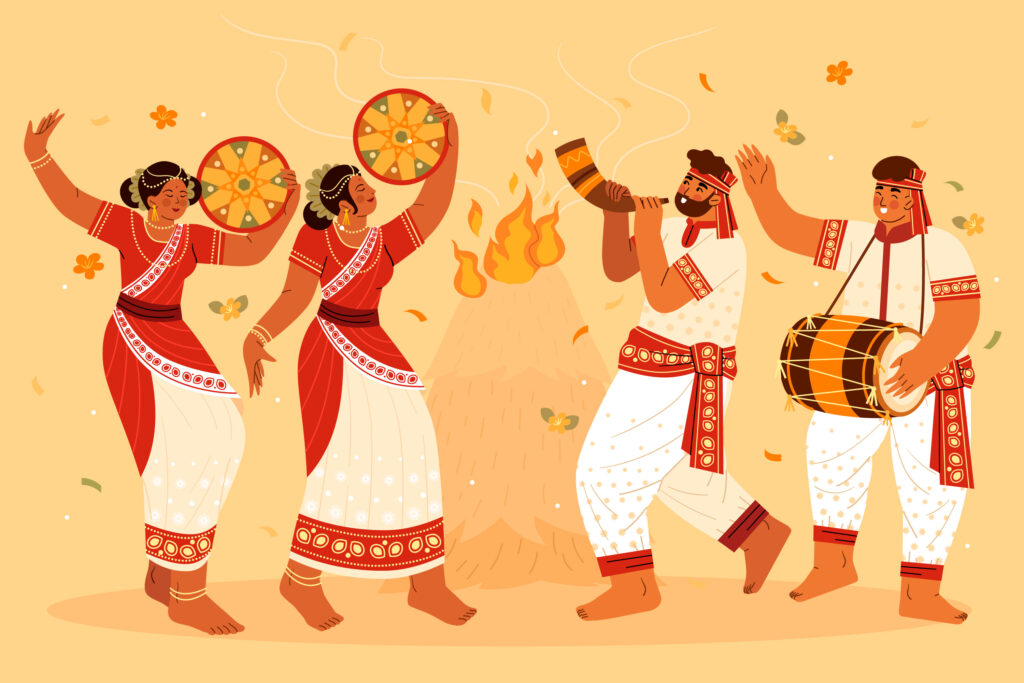
No Bihu celebration is complete without its iconic dance and music.
- Fast-paced rhythmic movements
- Energetic beats of the Dhol
- Folk songs expressing love, youth, and joy
Bihu dance is not just entertainment—it is a symbol of Assamese identity.
🌍 Cultural Significance of Bihu
Bihu represents:
👉 Harmony between humans and nature
👉 Celebration of agriculture and livelihood
👉 Unity among communities
It transcends religion and is celebrated by people of all backgrounds in Assam and across India.
✨ Bihu in Modern Times
Today, Bihu has gained recognition beyond Assam:
- Celebrated in cities like Guwahati and Delhi
- Cultural programs and stage performances
- Social media and global diaspora celebrations
Despite modernization, the core traditions remain intact, preserving the rich heritage of Assam.
🌼 Why Bihu Matters Today
In today’s fast-moving world, Bihu reminds us to:
- Stay connected to nature 🌱
- Celebrate community and culture 🤝
- Appreciate the cycle of life and seasons 🌾
It carries a universal message:
👉 Celebrate every phase of life—joy, struggle, and hope.
📝 Conclusion
Bihu is not just a festival—it is a way of life in Assam. From the joyous dances of Rongali Bihu to the reflective spirit of Kongali Bihu, it beautifully captures the essence of culture, agriculture, and human connection.
Whether you experience it in Assam or learn about it from afar, Bihu offers a powerful reminder of tradition, unity, and celebration 🌿✨